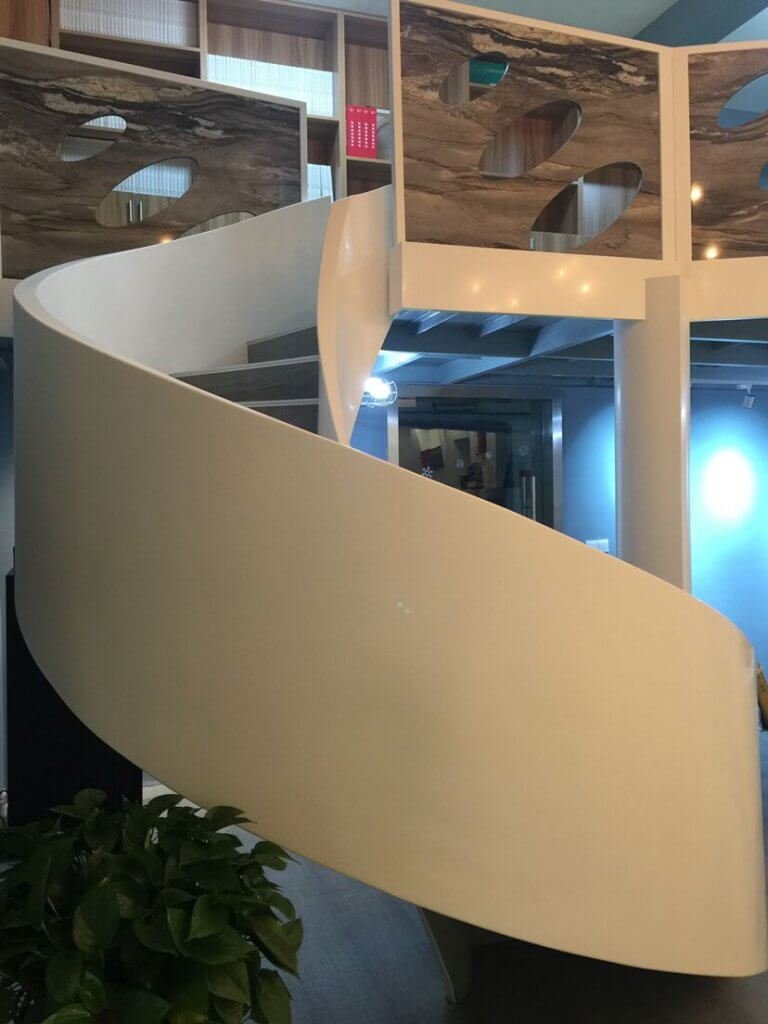
Thermoforming success depends on the exact sheet grade, colour, thickness, heating method and mould. Do not transfer a temperature, bend radius or heating time from one brand or formulation to another. Use the supplier’s processing guidance and a representative prototype.
Cracking or whitening at the bend
Check whether the selected grade is suitable for the requested radius. An overly tight curve, uneven heating, damaged edges or forcing the sheet before it is ready can contribute to defects. Increasing heat without guidance may damage the material. Stop and review the process rather than accepting a weakened component.
Uneven shape or springback
Review mould accuracy, support and the controlled cooling procedure. The sheet needs support across the intended curve, with allowance for the material’s approved forming behaviour. Verify the finished component against the drawing after cooling; a shape that looks correct on the mould may change after release.
Colour and pattern changes
Heating and stretching can affect appearance, especially with decorative patterns. Approve a prototype using the production colour and thickness. Place seams and visible faces intentionally, and compare the formed piece with adjacent flat material under project lighting.
Before production
Record the grade, lot, equipment, process settings and acceptance criteria from the approved trial. Agree the finished radius, dimensions, finish and seam locations. Thermoforming is a fabrication process, not a guarantee that every sheet can form any shape.
Prototype planning · Bending workflow. Contact KSTONE with your specification and drawings for product-specific guidance.