A thick-looking countertop edge does not necessarily mean the entire sheet is equally thick. Separate sheet thickness from finished edge depth when comparing solid surface quotations.
Specify the sheet
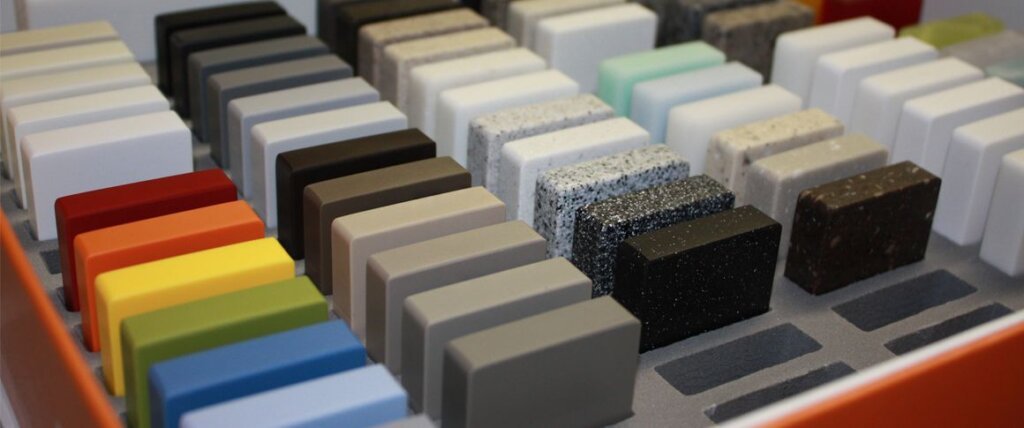
Record the actual sheet thickness and tolerance, grade, colour, length and width. Availability depends on the product and order. A catalogue range should not be interpreted as every colour being available at every thickness.
Specify the finished edge
A fabricator can build up an edge using additional material. Show the edge profile and finished depth on the drawing, together with seam positions and pattern direction. Compare fabrication labour and material yield, not just the visible edge dimension.
Review support and intended use
Thickness alone cannot determine an allowable span or load. Support, cut-outs, overhangs and fixing details need review against the selected material’s fabrication instructions. Wall panels, vanity tops and commercial counters have different requirements.
Confirm before ordering
Provide drawings and ask the supplier to distinguish raw sheets from joined or built-up components. Approve the final dimensions and finish in writing. Curved parts need their own forming trial.
Use the detailed thickness selection guide and cut-to-size guide. Contact KSTONE with your specification and drawings for product-specific guidance.