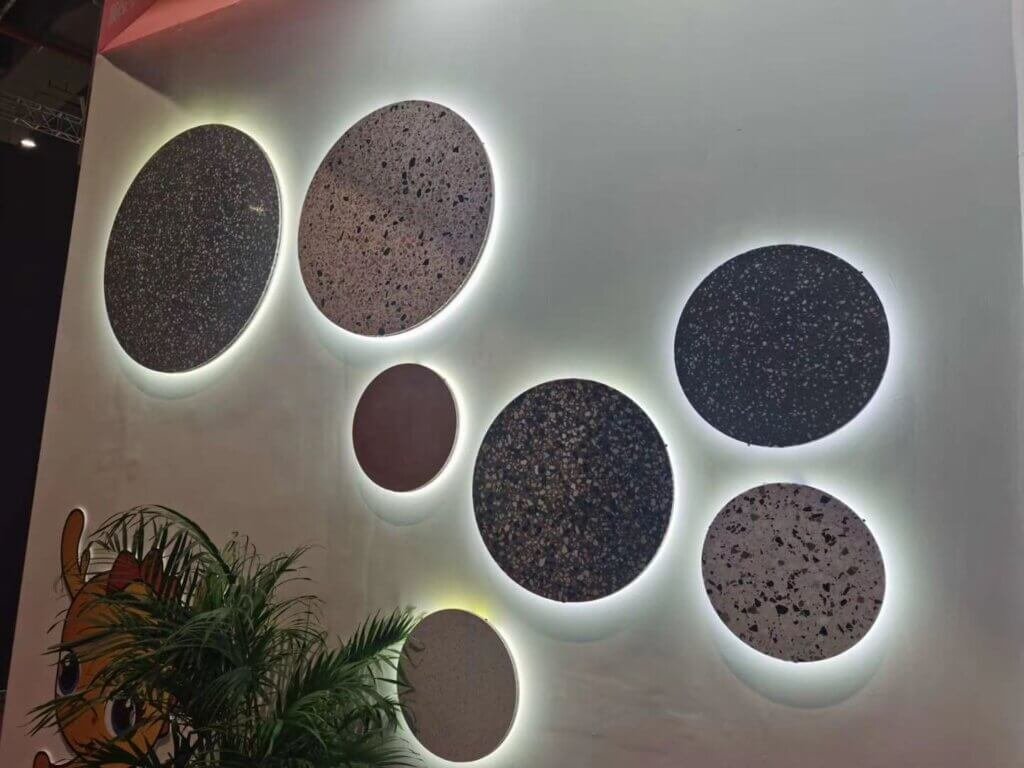
Mineral-filled acrylic solid surface and ordinary thermoplastic acrylic sheet are different materials. They should not share one manufacturing description or an assumed set of performance claims. Specify the product construction before choosing it for a counter, sign, panel or fabricated component.
What acrylic solid surface contains
Solid surface typically combines a polymer binder, mineral filler and pigments. A “pure acrylic” designation refers to the binder system; it does not mean a filler-free sheet. Composition and properties vary by product series, so request technical data for the exact material.
Sheet production and fabrication
Solid surface sheets are produced through mixing, casting and curing processes. Cutting, jointing, sanding and suitable thermoforming happen at the fabrication stage. Vacuum forming ordinary acrylic sheet is a different process and should not be presented as the standard way mineral-filled solid surface sheets are manufactured.
Choose by the intended use
Confirm opacity or translucency, finish, thickness, joint appearance and processing requirements. For curves, prototype the intended grade, colour and radius. For counters, agree supports and cutouts. Neither the word “acrylic” nor a smooth appearance proves scratch resistance, fire approval or exterior suitability.
Approve the specification
Compare samples and documents, not only generic material names. Ask for dimension tolerances, compatible adhesives, cleaning guidance and warranty scope. Protect solid surface worktops from hot cookware and direct cutting even when the material can be refinished.
Solid surface definition · How sheets are made. Contact KSTONE with your specification and drawings for product-specific guidance.