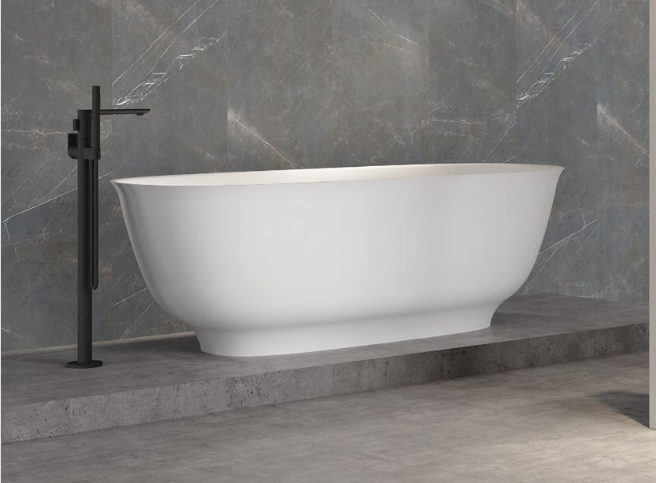
“Acrylic bathtub” and “solid surface bathtub” can describe different product constructions. Many acrylic tubs use a formed acrylic surface with backing reinforcement; mineral-filled solid surface tubs use a different composite structure. Confirm the actual product specification rather than comparing the names alone.
Compare the complete construction
Ask for the material system, reinforcement, wall construction, dimensions and empty weight. Appearance alone does not show how a tub is supported. Evaluate the manufacturer’s specified service conditions and warranty instead of assuming every product in one category performs identically.
Plan delivery and floor support
Check access routes, door widths, lifting arrangements and the floor’s capacity for the filled tub plus occupants. Heavier products can need special handling. The installer should follow the manufacturer’s support and levelling instructions; a freestanding appearance does not eliminate structural requirements.
Check plumbing and usability
Confirm drain and overflow locations, connection access, water capacity and usable internal dimensions. Review the actual bathing shape and edge design. Match plumbing parts and installation clearances to the approved drawing before ordering.
Assess cleaning and repair
Both categories need compatible cleaning products. Scratch resistance, repair options and finish restoration vary by formulation and construction. Request care instructions and clarify whether repair is practical for the chosen colour and surface. Do not select a tub on unsupported claims of permanent shine, antibacterial performance or universal superiority.
Bathroom basin collection · Solid surface care. Contact KSTONE with your specification and drawings for product-specific guidance.