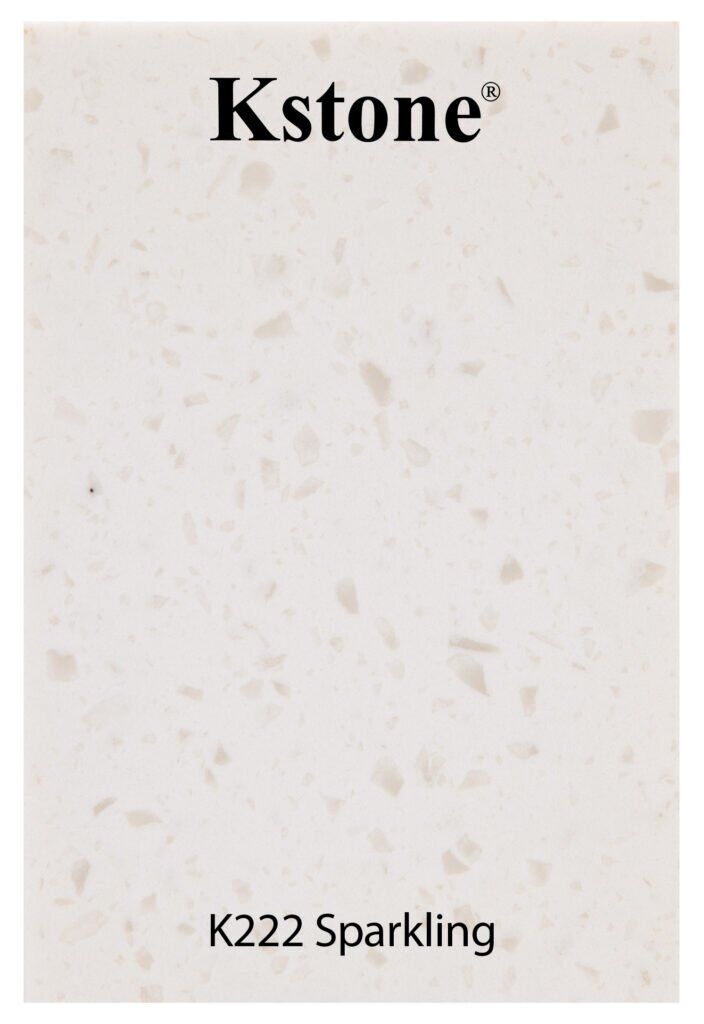
Acrylic solid surface is an engineered material combining a polymer resin binder, mineral filler and pigments. It is supplied as sheets and fabricated into countertops, sinks, vanity tops, reception desks and interior cladding.
What does 100% acrylic mean?
“100% acrylic” describes the resin system, not the whole sheet. Mineral filler, commonly aluminium trihydrate (ATH), remains part of the formulation. Modified acrylic typically uses an acrylic and polyester resin system, but terminology and recipes vary between suppliers. Ask for the specification of the actual product rather than applying a universal percentage formula.
Which grade fits your project?
Compare technical documents and fabrication trials for the intended application. Hardness alone does not describe impact strength, bending behaviour or service life. A resin label is also not a guarantee of fire performance, food-contact approval, chemical resistance or exterior suitability.
- For flat countertops, review colour, finish, scratch visibility, repairability and support details.
- For curved components, request the grade-specific thermoforming guidance and a prototype.
- For laboratories or healthcare spaces, check the exact chemicals and cleaning agents against product test data.
- For exterior use, request documented suitability for the chosen colour and exposure conditions.
How to verify material before buying
Request a product data sheet, safety data sheet, relevant test reports, batch identification and written warranty. Approve a physical sample and, for complex work, a fabricated mock-up. Confirm that any certificate covers the product being ordered and remains valid.
Do not identify resin composition by burning a sample or smelling fumes. Chip appearance and boiling-water reactions are not reliable proof of grade either. Where composition is contractually important, agree on documented specifications and appropriate independent laboratory testing.
What to expect in use
Solid surface offers non-porous surfaces, inconspicuous adhesive joints and the possibility of refinishing many scratches. It still requires cleaning and protection from sharp tools and direct hot cookware. Joint visibility and repair outcomes depend on colour, pattern, fabrication and damage.
Read the pure versus modified acrylic comparison and fabrication guide. Contact KSTONE with your application, drawings and material requirements.