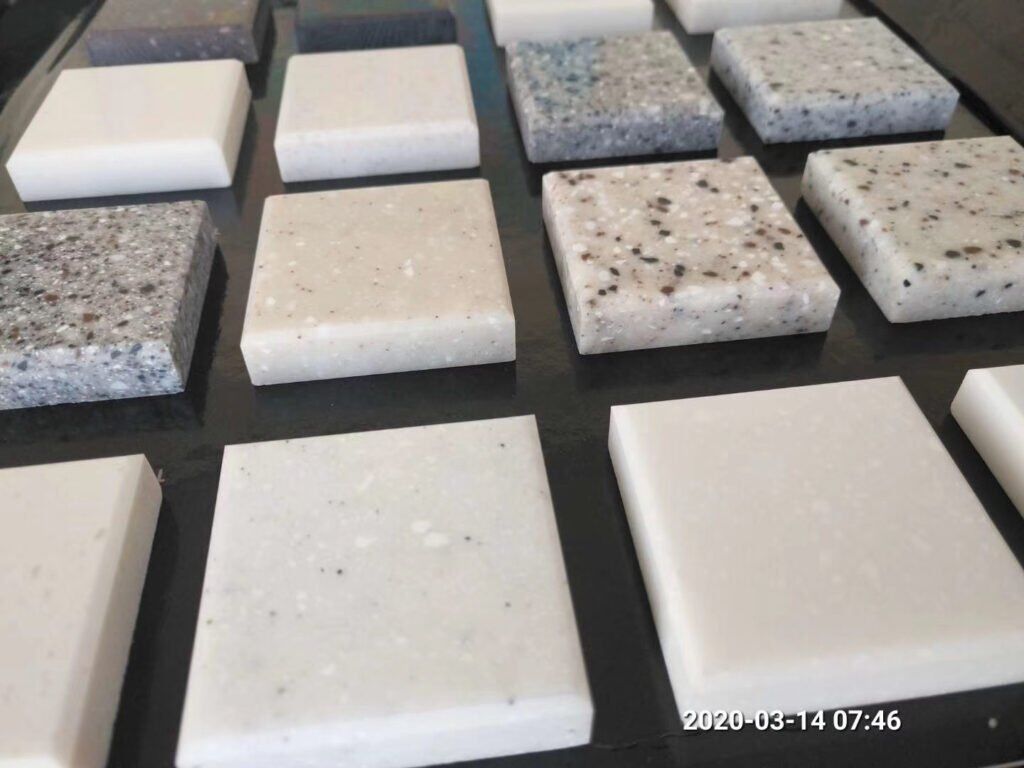
Solid surface combines a polymer resin binder, mineral filler and pigments or decorative particles. The distinction between pure and modified acrylic concerns the resin system. Exact proportions can vary with the grade, colour and formulation.
Pure acrylic resin system
Pure acrylic solid surface uses an acrylic resin system with mineral filler, commonly aluminium trihydrate (ATH). MMA is methyl methacrylate and PMMA is polymethyl methacrylate. “100% acrylic” does not mean that a finished sheet is made entirely of resin.
Modified acrylic resin system
Modified acrylic commonly uses acrylic and polyester constituents with mineral filler and additives. Request the current specification of the exact product. Do not combine percentage ranges from different formulations into a single recipe or infer performance from resin percentage alone.
What composition does not prove
A listed ingredient does not establish fire classification, food-contact approval, emissions certification, exterior suitability or warranty. Those claims require documentation covering the actual product and application.
From formulation to project approval
Use traceable samples to confirm appearance and fabrication suitability. For curved work, approve a representative prototype using product-specific instructions. If composition is important to the contract, agree suitable independent testing rather than improvised burning or chemical experiments.
See our material verification guide and grade comparison. Contact KSTONE with your specification and drawings for product-specific guidance.