UPE is not a sufficiently precise purchasing specification by itself. A supplier may use it for a polyester-based or modified resin product. Do not assume it always means the same formulation as modified acrylic.
Ask what the name describes
Request the full resin-system description, mineral filler, product code and technical data. Modified acrylic commonly describes a resin blend containing acrylic and polyester constituents, but recipes vary. UPR is commonly used for unsaturated polyester resin; the abbreviation does not establish the composition of a finished sheet.
Compare the actual requirements
Review sheet dimensions, finish, joint adhesive, impact and chemical data, and any forming requirements. High ATH content alone does not prove fire approval, heat tolerance or chemical suitability. Ask for application-specific evidence rather than selecting by an abbreviation.
Use samples for fabrication approval
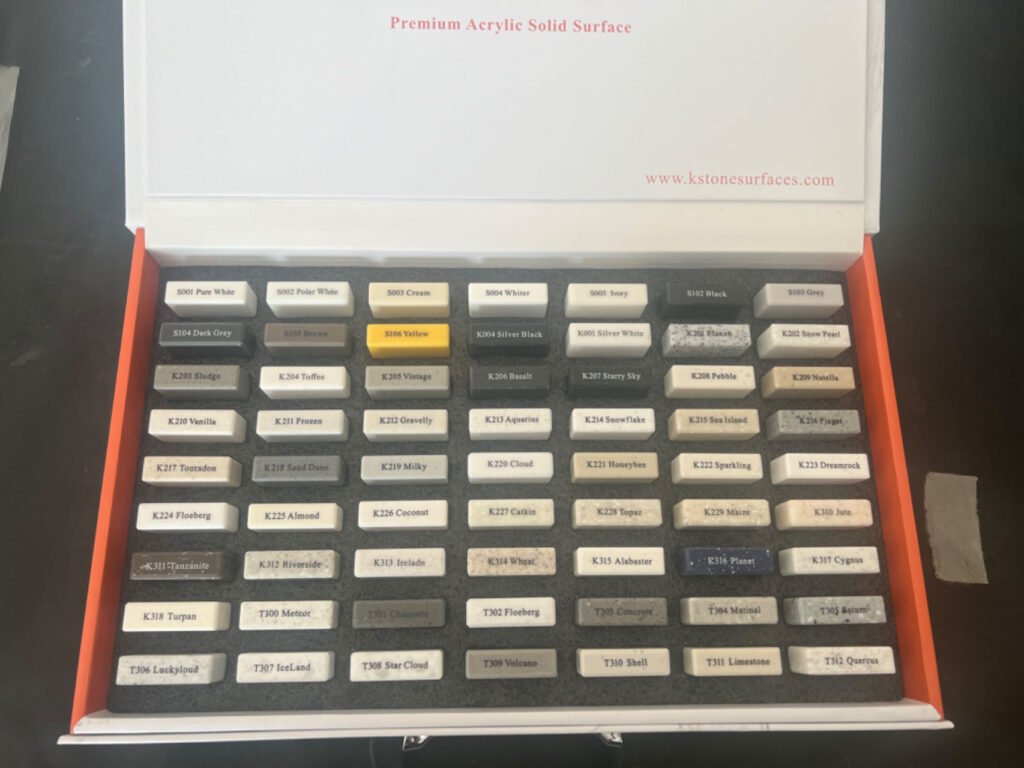
Approve a physical sample, a finished joint and any demanding curved section. Do not use smell, burning, cutting chips or price as proof of the resin system. If composition matters contractually, define the specification and agreed independent testing.
Confirm warranty and normal care
Request written coverage for the selected product. The material can still scratch or suffer heat damage; use cutting boards and trivets. Non-porous surfaces need routine cleaning and do not automatically have antibacterial certification.
See the grade comparison and verification checklist. Contact KSTONE with your specification and drawings for product-specific guidance.