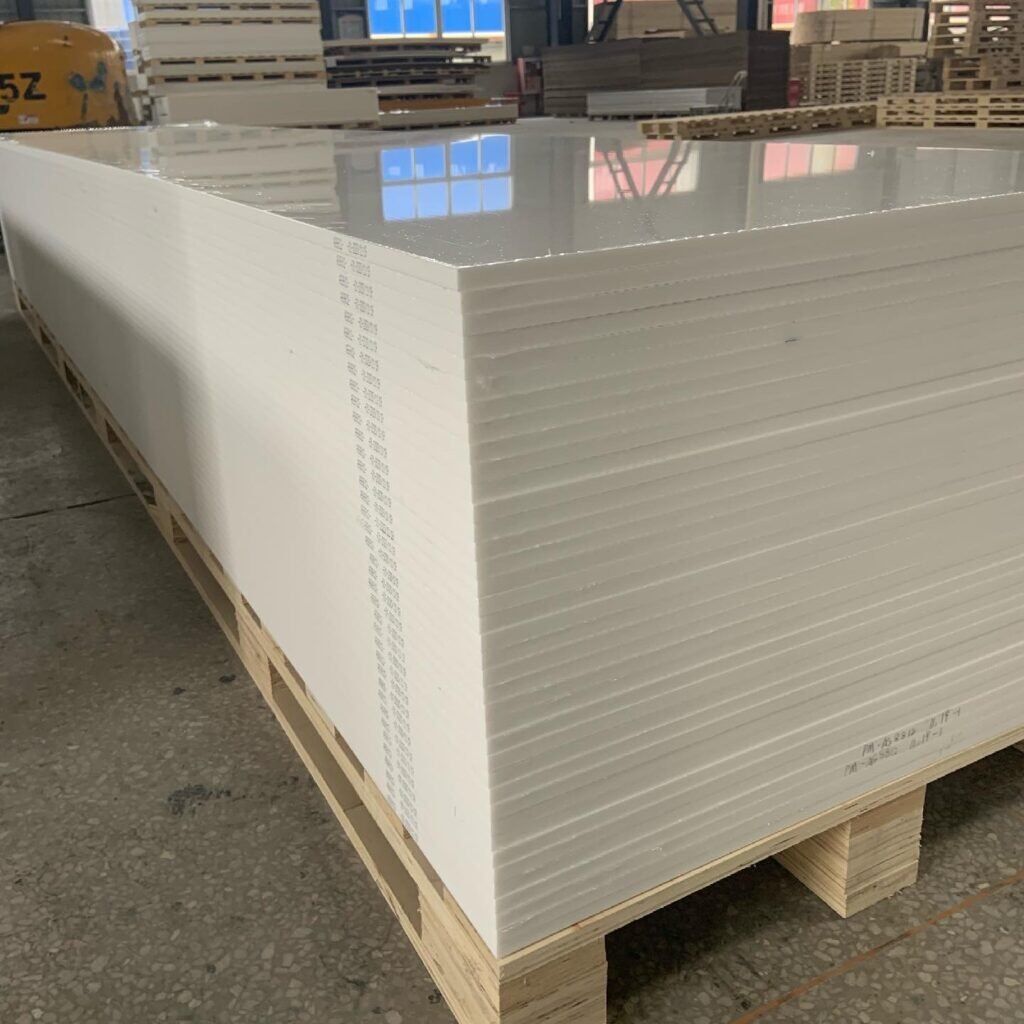
Pure acrylic and modified acrylic refer to different resin systems within mineral-filled solid surface. Neither name alone establishes suitability, lifespan or certification. Compare the exact product offered for your application.
Composition
Pure acrylic uses an acrylic resin system together with mineral filler and pigments. “100%” does not describe the entire sheet’s resin content. Modified acrylic uses a different resin formulation, often an acrylic and polyester blend. Confirm the supplier’s definition and product documents instead of assuming a universal recipe.
Fabrication
Check cutting, adhesive compatibility, support and finish. Curved work needs grade-specific forming guidance and a representative prototype. Do not assume a common heating temperature or that one trial applies to all colours.
Appearance and maintenance
Compare physical samples and joint mock-ups under final lighting. Both grades need protection from sharp tools and hot cookware. Many light surface scratches may be refinished, but outcomes depend on the product and finish.
Documentation and verification
Request data sheets, relevant reports, product identity and written warranty terms. Do not identify a grade by burning, smelling fumes, acid tests, chip shape or a price threshold. Where necessary, agree appropriate testing with a qualified laboratory.
Cost and selection
Compare matching dimensions, colour, quantity, fabrication and delivered scope. Do not assign a fixed lifespan or guaranteed saving to a resin label. Choose a grade that meets the documented requirements and approved sample.
Read the detailed pure versus modified guide and cost guide. Contact KSTONE with your specification and drawings for product-specific guidance.