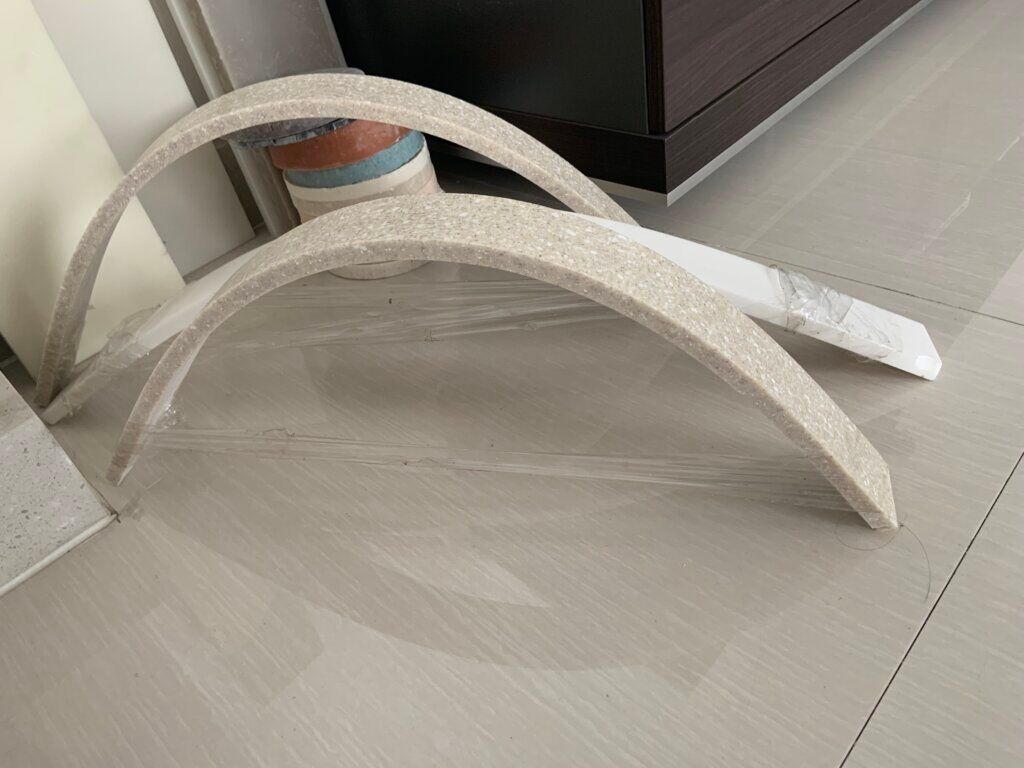
Plan acrylic solid surface bending as a controlled fabrication process. A generic heat-gun instruction is not an adequate production method for mineral-filled solid surface sheets. Uneven heating can cause local damage, whitening or distortion.
Prepare the information first
Identify the exact grade, colour, thickness, finished inside radius and tolerance. Obtain its forming guidance and have the fabricator review the drawing. Modified acrylic should not be selected for a curve solely because its price is lower.
Review equipment and tooling
The equipment must provide the heating uniformity and control required by the selected material. Review the mould geometry, surface condition, handling method and cooling support. Settings used for unfilled acrylic plastic should not automatically be applied to mineral-filled solid surface.
Run and inspect a representative trial
- Use the specified material and the most demanding section of the design.
- Record the validated heating, forming and cooling method.
- Inspect colour changes, cracks, springback and final dimensions.
- Check how the formed part joins and fits surrounding components.
- Approve the prototype before batch production.
Account for finishing and service
Keep allowance for trimming and the final finish in the fabrication plan. The finished component still requires appropriate support and protection from heat and impact in service. A formed sample does not establish fire performance, waterproofing or exterior suitability.
Read the thermoforming process overview and curved drawing checklist. Send KSTONE your drawing to discuss material and prototype requirements.