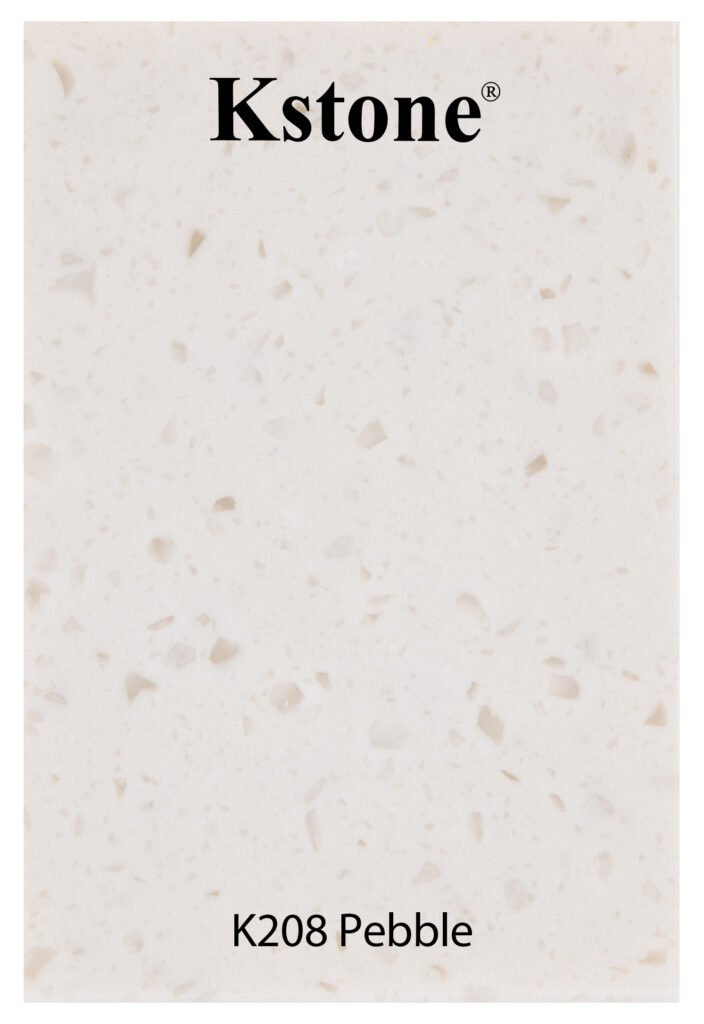
Acrylic solid surface is a mineral-filled polymer composite. Its resin binder is a plastic material, but the finished sheet differs from ordinary unfilled plastic because it combines resin, mineral filler and pigments. Calling it “not plastic” hides the role of the polymer; calling it simply plastic overlooks the composite structure.
What is in acrylic solid surface?
The material typically contains an acrylic resin system, aluminium trihydrate (ATH) mineral filler and pigments. Formulations vary. “100% acrylic” normally describes the resin system, not a sheet made entirely of acrylic: mineral filler remains an important part of the material. Modified acrylic products use a different resin formulation, which should be confirmed in the supplier’s technical documents.
What does the composition mean in practice?
The resin binds the ingredients together and influences fabrication behaviour. The mineral filler contributes to the material’s appearance and physical properties. Performance depends on the complete formulation and manufacturing process, so resin labels alone cannot establish suitability for a project.
- Solid surface can be fabricated into countertops, vanity tops, sinks and interior cladding.
- Compatible adhesive and skilled finishing can create inconspicuous joints; a joint is not literally absent.
- Many surface scratches can be refinished, but repair depends on damage, colour, finish and access.
- The surface can still scratch or suffer heat damage. Use cutting boards and trivets.
How to choose a grade
Check the exact product’s data sheet, fabrication guidance, physical sample and written warranty. For curved work, ask about tested thermoforming conditions rather than assuming every resin system bends equally well. Non-porous does not mean maintenance-free or automatically antibacterial.
See our pure versus modified acrylic comparison and fabrication guide. Send KSTONE your application and drawing to discuss the appropriate material.