Acrylic solid surface can scratch during everyday use. It is generally softer than granite and engineered quartz, so knives, grit and dragged objects may leave marks. Its practical advantage is that many superficial scratches can be refinished; that does not make the surface scratch-proof.
Scratch resistance and scratch visibility are different
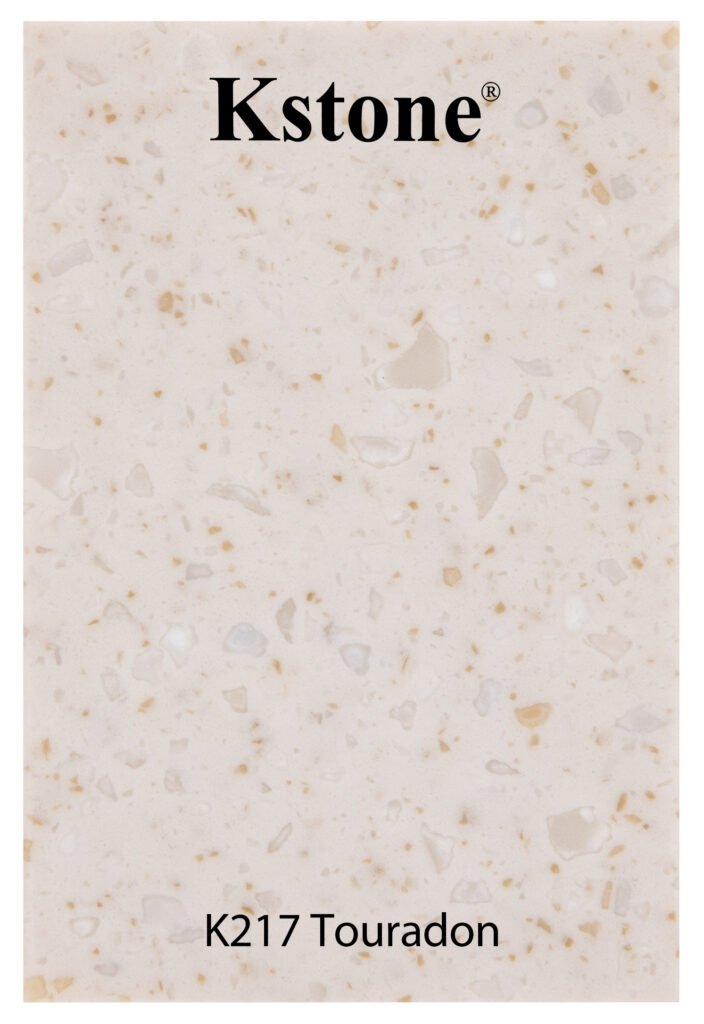
A dark, uniform or glossy surface may show fine marks more clearly than a light, patterned or matte finish. Choosing a finish that suits the maintenance routine is as important as comparing material specifications. Assess a physical sample under the project’s actual lighting.
Common causes of marks
- Cutting food directly on the countertop.
- Sliding ceramic objects, equipment or items with grit underneath.
- Using unsuitable abrasive pads or cleaners.
- Repeated contact in busy counters, workstations or reception areas.
Reduce scratches in use
Use cutting boards, lift objects and keep the surface free of grit. Clean with the products approved for the exact material and finish. A protective pad may help under equipment, but check that it does not trap heat or conflict with the equipment’s instructions. Train staff on cleaning and handling practices.
Can scratches be removed?
Light scratches can often be blended through controlled sanding and refinishing. The correct process depends on the finish, colour and depth of damage. Avoid an improvised spot treatment that leaves a different sheen or uneven surface. Ask a trained fabricator to assess deep scratches, chips, cracks and patterned materials before repair.
Refinishing is not the same as applying a universal protective coating. Do not assume that an aftermarket coating is approved, improves scratch resistance or preserves the warranty. Confirm compatibility with the supplier.
Choose for the maintenance you can provide
For high-contact areas, approve a sample, agree the final finish and plan access for future refinishing. If the application involves frequent direct cutting, heavy abrasion or harsh chemicals, review whether another work surface is more appropriate.
See our fabrication guide and commercial solid surface versus quartz comparison. Contact KSTONE to discuss colour, finish and usage requirements.